Choosing a Crypto Wallet: Key Factors

Choosing a crypto wallet? It's not just a hassle-free click. Security comes first. Two-factor authentication? A must. Non-custodial wallets give you the keys—literally. Hardware wallets add another layer of protection. Then there's the usability; if the interface looks like a spaceship control panel, you'll feel lost. Check supported currencies, too. If it doesn't handle your favorite crypto, what's the point? Reputation matters. A wallet with a sketchy past? Pass. Keep reading for more essential insights.
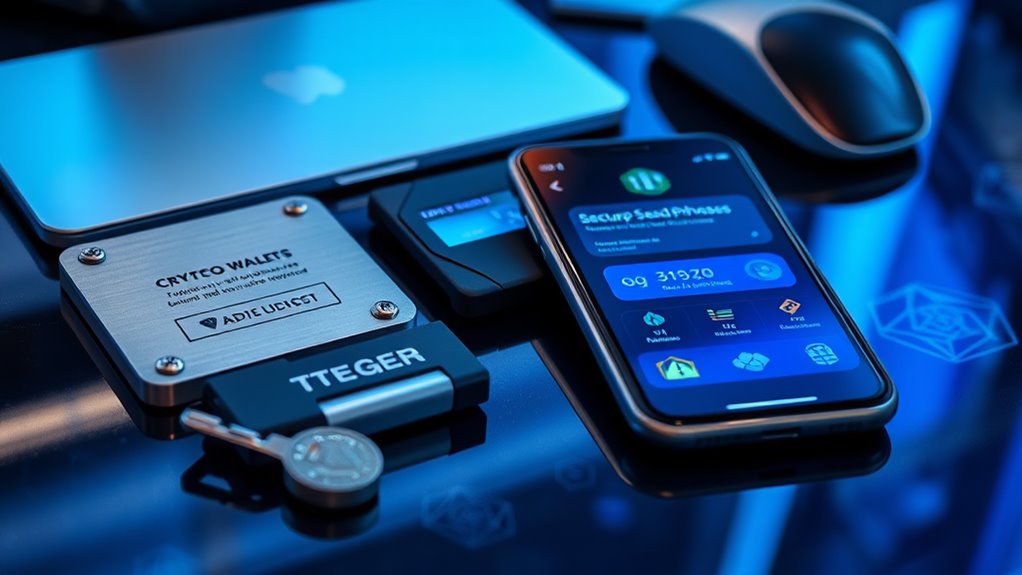
How does one even begin to choose a crypto wallet in a sea of options? It's overwhelming, really. Security features are a must. Two-factor authentication? Yes, please. No one wants unauthorized access messing with their assets.
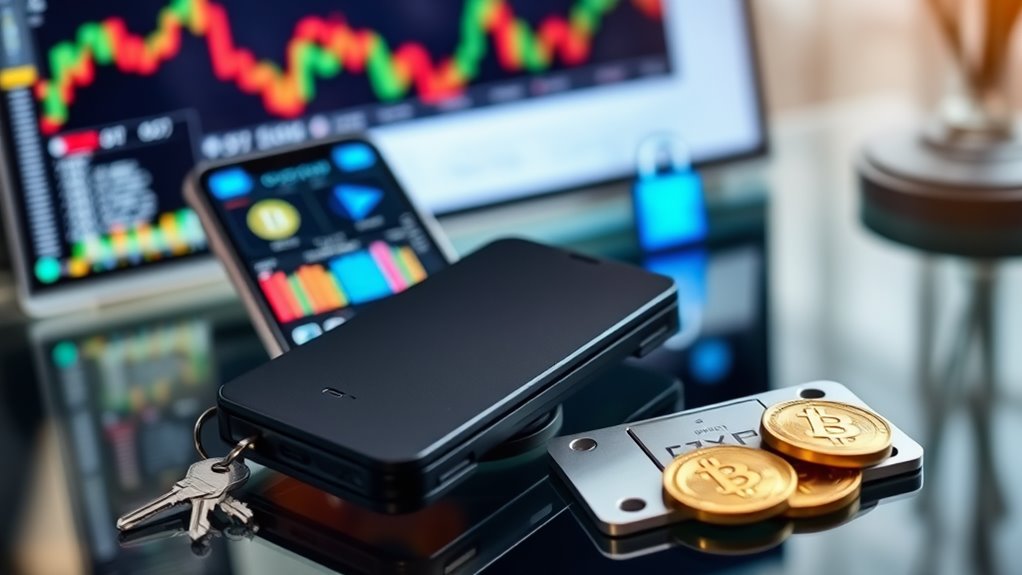
Then there's the private key control. Non-custodial wallets keep your keys offline. That's a big win. Hardware wallet compatibility? Think Trezor or Ledger. Offline security is like having a vault. Arculus Cold Storage offers impressive security with its tap-and-hold mechanism for authorizing transactions. And don't forget about that seed phrase backup. Lose your wallet? No problem—just recover it like magic. But, beware of closed-source wallets. They might have something to hide.
Private key control is crucial; non-custodial wallets offer offline security, while hardware wallets like Trezor and Ledger keep your assets safe.
Next up, let's talk about supported cryptocurrencies. If you're into meme coins, some wallets cater to that niche. Dogecoin and Shiba Inu lovers, rejoice! Multi-chain support is the way to go, too. Coinomi's got your back for managing assets across blockchains. Hot wallets typically support a wide range of cryptocurrencies, making them a popular choice for traders. Additionally, make sure to check the wallet's compatibility with multiple devices to ensure seamless access across your tech.
If you're a DeFi enthusiast, staking options might tickle your fancy. And atomic swaps? Oh, those beauties let you trade without third parties.
User interface and usability matter more than you think. An intuitive design makes a huge difference, especially for beginners. Cross-platform compatibility? Yes, let's have that on desktop and mobile. Live charts for tracking your portfolio? Count me in. Customizable transaction fees? That's just smart. And when you have 24/7 customer support, you're golden.
Integration with exchanges can make or break a wallet. Built-in exchanges are convenient. Nobody wants to jump through hoops to swap coins. DeFi app connectivity? It's essential for today's crypto world. But watch out for fees. In-wallet exchange fees can be steep, and high in-app purchasing fees? No thanks.
Lastly, reputation is everything. Established brands like Trezor and Ledger have proven track records. Transparency builds trust. Avoid those wallets with hacking histories. They're just bad news.
Frequently Asked Questions
What Is the Difference Between Hot and Cold Wallets?
Hot wallets are like the party animals of the crypto world—always online, ready for action, but prone to getting hacked. They store your keys on the internet, inviting trouble.
Cold wallets? They're the introverts. Offline and secure, they keep your keys safe from online creeps but can be a hassle for quick trades.
It's a classic case of convenience versus security—one's easy, the other's safer. Choose your fighter wisely!
Are Crypto Wallets Insured Against Theft or Loss?
Crypto wallets? Yeah, some can be insured against theft or loss. Companies like Lloyd's and Boost Insurance offer policies that cover breaches and theft.
But hold up! If you misplace your private keys or mess up with self-custody, too bad. No coverage for user screw-ups.
And don't get too comfy; exclusions abound, especially for decentralized exchanges.
Can I Use Multiple Wallets Simultaneously?
Absolutely, using multiple wallets at once is not just possible; it's often smart.
Diversifying wallets can help manage different assets and transactions. Got some Bitcoin? Maybe stash it in a hardware wallet.
Ethereum for daily trades? That's a software wallet job. Sure, it might feel like juggling chainsaws, but it's all about keeping things organized.
Just don't lose track of those seed phrases, or you'll be in deep trouble.
How Do I Transfer Funds Between Wallets?
Transferring funds between wallets isn't rocket science, but it can feel like it.
First, check the sending wallet—make sure it's updated and secure. Got enough balance? Great.
Grab that recipient's wallet address—no typos! Use the "Send" option, double-check the details, and hit confirm.
Watch out for network fees; they can sneak up on you.
And for heaven's sake, don't mix up your coins—Bitcoin doesn't belong in an Ethereum wallet!
What Happens if I Lose My Wallet Access Credentials?
Losing wallet access credentials? Ouch. You're locked out.
No private keys, no seed phrases? Say goodbye to your funds. It's like throwing cash into a black hole.
Missed selling opportunities? Just ask Stefan Thomas, who lost 7,002 BTC to a forgotten password.
Financial instability? Think James Howells, drowning in landfill woes.
Plus, irreversible transactions mean any mistake? It's gone forever. Good luck with that.
Crypto can be a brutal game, after all.