
Understanding Digital Wallets in Cryptocurrency

Digital wallets are your go-to storage for cryptocurrency—like your high-tech piggy bank, only way cooler. There are hardware wallets, software options, mobile apps, web wallets, and even paper methods. Each has its quirks and levels of security. But let's be real: lose your private key, and you can kiss your crypto goodbye. Think of wallets as gatekeepers; they protect your assets but also come with risks, like phishing scams. Want to know more about keeping your stash safe?

Digital wallets in cryptocurrency are the modern-day equivalent of a treasure chest, but without the pirates and buried maps. They come in various forms, each with a unique flair.
Digital wallets for cryptocurrency are today's treasure chests, offering unique styles to safeguard your digital riches.
You've got hardware wallets, those sturdy little devices like Ledger and Trezor, great for keeping your crypto safe from online thieves. Ledger hardware wallets specifically store private keys in a Secure Element chip, offering protection comparable to security systems used in bank cards. Then there are software wallets, like Exodus and MyEtherWallet, which balance the fine line between being user-friendly and secure.
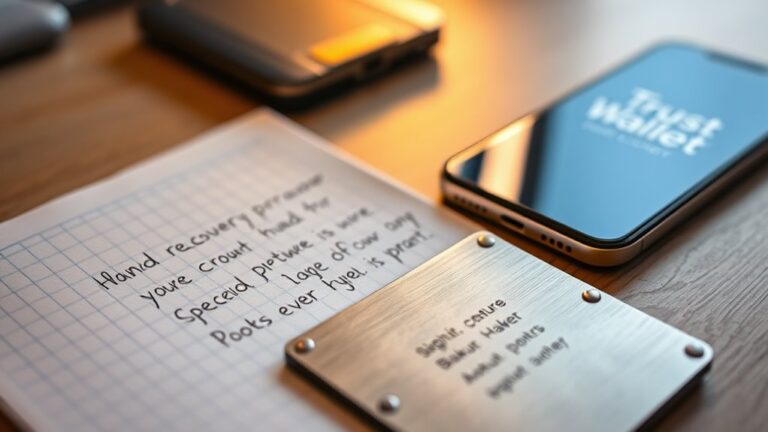
Mobile wallets, such as Coinbase Wallet and Trust Wallet, let you transact on the go. Who needs cash when you can pay for your coffee with a swipe? Mobile Wallets are a type of software wallet.
Don't forget about web wallets, accessible from any device with internet, but don't be surprised if they come with a side of vulnerability. And paper wallets? They're like the old-school way of hiding cash under your mattress—totally offline and secure, but also a little impractical.
At the heart of these wallets are public and private keys. Public keys are like your email address; share them freely. Private keys? That's your secret password. Lose it, and your crypto is gone, poof!
Seed phrases? They're your backup plan, but good luck remembering a jumble of words. Integration with blockchains means your wallet knows how much crypto you have, and it can send or receive it like a pro.
Security features are essential. Two-factor authentication adds a layer of protection, while encryption tries to keep those keys safe from prying eyes. Cold storage is a fancy term for keeping your wallet offline, away from hackers, while biometric authentication lets your phone recognize you—no more typing in passwords like it's 2005. Understanding wallet security is crucial for anyone involved in cryptocurrency.
But beware the risks! Phishing scams and malware are lurking, waiting to snatch your info. Key loss? That's a nightmare.
Frequently Asked Questions
Are Digital Wallets Safe From Hackers and Fraud?
Digital wallets? They're not exactly Fort Knox.
Sure, they have fancy encryption and two-factor authentication, but hackers love a challenge. Phishing scams, malware, and even good old social engineering are just waiting to trip users up.
And let's not forget about that beloved cold storage—because who doesn't want to juggle seed phrases?
In short, wallets can be safe, but they're not invincible. Keep your wits about you, or risk losing it all.
How Do I Recover a Lost Digital Wallet?
Losing a digital wallet? Your options are limited, my friend.
If you've got a seed phrase, great! Just fire up a compatible app and hope for the best.
No seed phrase? Good luck. You might try contacting customer support, but don't hold your breath.
Maybe check some old drives or hire a pricey recovery service.
Just remember, prevention is key—so don't stash those seed phrases in the cloud like a rookie.
What Fees Are Associated With Using Digital Wallets?
Digital wallets? They usually don't hit you with platform fees. Most of the costs? Those go to the blockchain networks.
Sure, exchanges might slap on some trading fees, but wallets like Bitcoin.com? They keep it simple.
Network fees vary. Congestion? It jacks up the prices. Want to avoid the chaos? Use low-fee networks.
Just remember: the more complex your transaction, the more you'll pay. It's all about that sweet balance, folks.
Can I Use a Digital Wallet for Non-Cryptocurrency Transactions?
Absolutely, a digital wallet can handle more than just crypto.
It's not just for Bitcoin nerds. These wallets store your credit cards, gift cards, and even loyalty points.
Need to pay for coffee? Swipe, tap, done. Want to keep track of your spending? Easy peasy.
Just remember, not all wallets are created equal. Some are tied to specific stores or brands.
How Do Different Digital Wallets Compare in Features?
Different digital wallets are like apples and oranges—some are juicy and accessible, while others are tough and secure.
Hot wallets are user-friendly but a bit exposed to hackers. Cold wallets? They're the fortress of the bunch, locking up your private keys offline.
Software wallets can be a mixed bag; some are open-source, while others just beg to be hacked.
In short, choose your wallet wisely, or risk your digital dough.