Trade Wars Fuel Bitcoin’s Rise as Wall Street’s Crisis Sanctuary


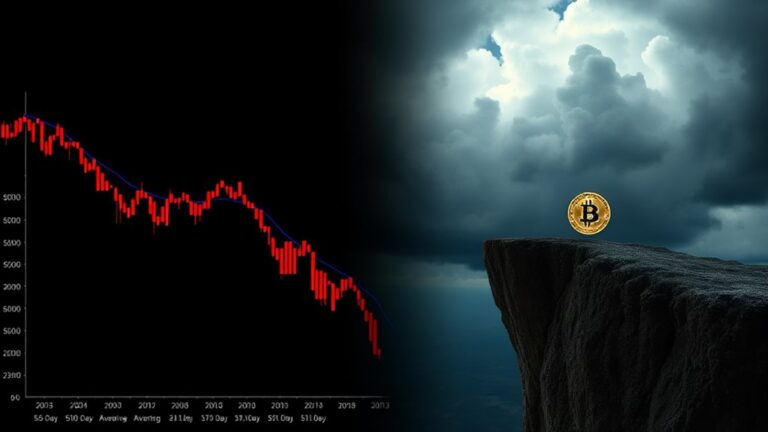
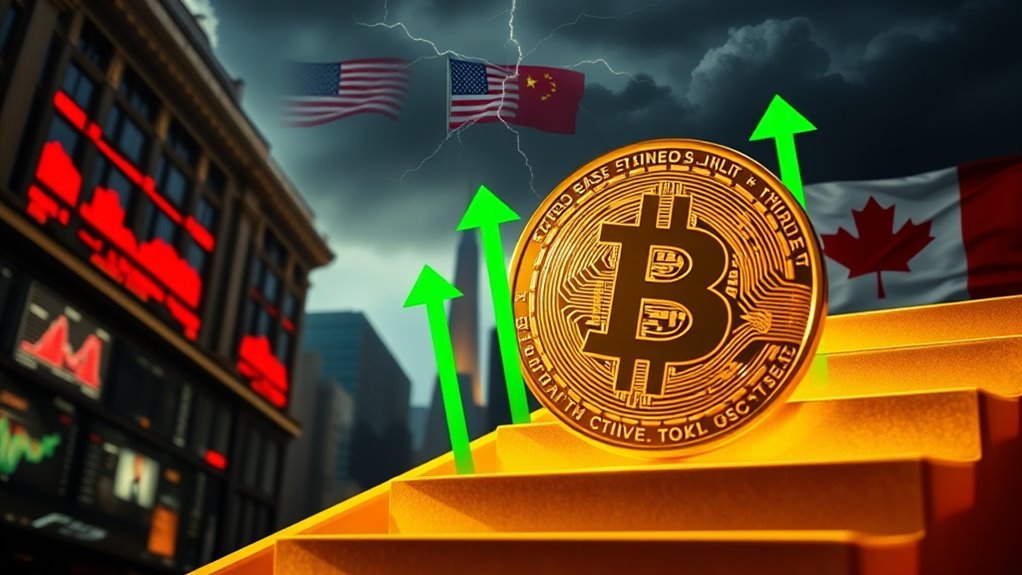
While global powers exchange economic blows through tariffs and trade restrictions, Bitcoin has quietly emerged as the unexpected beneficiary of international tension. The cryptocurrency dropped to $91,200 after the U.S. slapped 25% tariffs on Canada and Mexico, along with 10% on China. But then something interesting happened. Bitcoin bounced back 10% to $102,000 before stabilizing around $97,000. Not bad for a digital asset some critics still dismiss as worthless.
These market movements weren’t just coincidence. When Wall Street smells trouble, investors scramble for safety. And increasingly, they’re looking beyond traditional havens. Gold? Treasury bonds? Please. Those are your grandfather’s safe harbors. Bitcoin offers something different—a shelter completely removed from government meddling.
When chaos hits markets, Bitcoin isn’t just another option—it’s the ultimate escape from government interference.
The timing tells the story. The S&P 500 peaked exactly 30 days after trade tensions escalated. Meanwhile, Bitcoin stabilized at key resistance levels despite the broader market tumult. Institutional players took notice. Strategy, for example, purchased a staggering $5.25 billion in Bitcoin while traditional markets wobbled. Some investors are even exploring gold-backed stablecoins as an alternative that combines blockchain technology with precious metal stability.
Make no mistake—the relationship between trade wars and cryptocurrency isn’t all sunshine and rainbows. Bitcoin initially faced substantial selling pressure as investors liquidated positions to cover margin calls elsewhere. The total crypto market cap temporarily shrunk to $3.4 trillion amid widespread profit-taking in altcoins.
But here’s what matters: Bitcoin recovered faster than Wall Street. Much faster. The rebound demonstrated a resilience that’s making traditional financial advisors uncomfortable. They should be. A temporary 30-day pause on tariffs allowed Bitcoin to rise above $100k, further proving its responsiveness to geopolitical developments.
As tariff threats continue and inflation concerns mount, Bitcoin’s appeal transcends borders. Chinese investors, facing strict capital controls, have embraced cryptocurrency as an escape hatch. European traders, watching their economies caught in the crossfire, have followed suit. Recent market data shows Bitcoin’s correlation with traditional risk assets has intensified due to increased institutional involvement.
The pattern is clear. Each new round of economic hostility drives another wave of Bitcoin adoption. Nations can restrict goods, services, and conventional currencies. But decentralized digital assets? They just keep flowing—tariff-free. Wall Street’s crisis has become Bitcoin’s opportunity.