Cold Wallets for Safe Crypto Storage

Cold wallets are like vaults for your crypto. They keep private keys offline, far from hackers and malware. Hot wallets? No thanks—they're basically open invitations for theft. Hardware wallets look like USBs and pack in serious security features, while paper wallets are just risky bits of printed paper. Sure, using a cold wallet can be a hassle, but losing your assets is way worse. Want to know about the nitty-gritty? Stick around.
In a world where cybercriminals seem to be having a field day, cold wallets for crypto storage emerge as a fortress for digital assets—if you can handle the isolation.
Let's face it, keeping your cryptocurrency safe is no walk in the park. With over $1 billion stolen in 2022 alone due to hot wallet hacks, one might wonder if a safer option exists. Enter cold wallets, the unsung heroes of crypto protection. They store private keys offline, dodging hackers and malware like a pro.
Keeping your cryptocurrency safe isn't easy, but cold wallets offer a robust shield against hackers and malware.
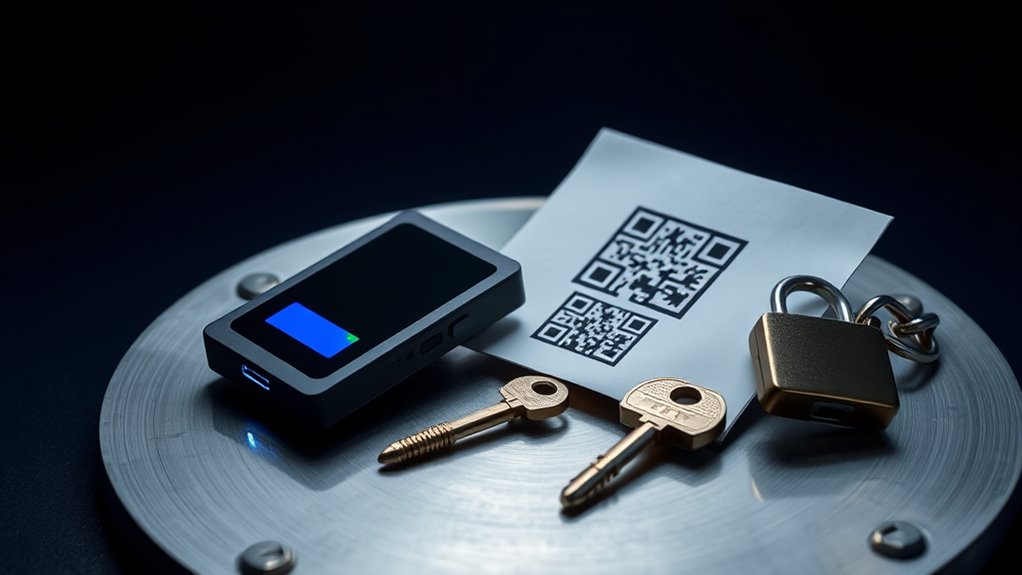
So, what's the deal? Cold wallets come in a few flavors. Hardware wallets resemble USB drives and pack a punch with offline key storage. Paper wallets? They're just printed documents with your keys. Sounds simple, right? But they're also at risk of being destroyed by the slightest spill. There are air-gapped devices too—computers that've never sniffed the internet. Hardware wallets offer enhanced security features like PIN codes and recovery phrases, making them a robust choice for crypto storage. These wallets are particularly effective for storing larger amounts of cryptocurrency, ensuring that your assets are safeguarded against potential online threats.
Cold wallets prioritize security over convenience, making them ideal for long-term holdings or hefty asset protection. Unlike their hot wallet cousins, which are always online and vulnerable to phishing attacks, cold wallets are like that introverted friend who avoids parties. Yes, it's inconvenient. Yes, it requires offline signing before transferring to online wallets. But that's the price of peace of mind.
The reality is, over 80% of crypto thefts happen through internet-connected wallets. Cold wallets mitigate these risks by keeping private keys locked away from prying eyes. But let's not sugarcoat it: if you lose your hardware wallet or mess up your recovery phrase, good luck getting your assets back. It's a double-edged sword. Some high-end hardware wallets like Ledger utilize a Secure Element chip that provides exceptional resistance against physical tampering attempts.
And sure, there are advanced features like quantum-resistant cryptography and social recovery systems. But at the end of the day, if you're not careful, all that fancy tech won't save you from your own human error. Cold wallets offer a solid layer of protection, but they demand respect and responsibility.
Frequently Asked Questions
What Types of Cold Wallets Are Available for Crypto Storage?
There are a few types of cold wallets for storing crypto.
First, hardware wallets like Ledger and Trezor. They're fancy, secure, and come with features like PINs and fingerprints.
Then, there are paper wallets. Just print your keys and hope they don't get wet or burned.
Finally, offline software wallets, like Electrum. They separate keys, keeping things a bit safer.
How Do I Choose the Best Cold Wallet for My Needs?
Choosing the best cold wallet? It's like picking a favorite child—hard!
First, check security features. Offline storage is a must; hackers are lurking!
Multi-asset support? Great, if you have a crypto zoo.
User-friendly interfaces? Yes, please! Who wants complicated?
Price can vary wildly, so don't overspend unless you're feeling generous.
And brand reputation matters. Don't get stuck with a dud. It's your money.
Choose wisely! Or don't, and live on the edge.
Can I Use a Cold Wallet for All Cryptocurrencies?
Can a cold wallet handle all cryptocurrencies? Not quite. Sure, many wallets support a ton of assets—thousands, even.
But there are always exceptions. Some coins don't play nice with certain wallets. Newer tokens? They might need a firmware update or might not work at all.
How Secure Are Cold Wallets Compared to Hot Wallets?
Cold wallets? They're like Fort Knox for your crypto. Seriously. They keep your private keys offline, safe from hackers lurking online.
Hot wallets? They're basically open invitations to cyber thieves. Sure, cold wallets might not be as convenient, but who needs convenience when you can dodge phishing scams and malware?
In the battle of security, cold wallets are the clear winners. Just keep those seed phrases safe and you'll be golden.
What Happens if I Lose My Cold Wallet Device?
If someone loses their cold wallet device, it's a real headache. They can't access their crypto, which is like losing a treasure chest without a map.
Sure, the seed phrase might save the day, but if it's not on hand, good luck! Funds are gone, just like that.
Report it, maybe cry a little, and hope for the best. Meanwhile, hackers are probably having a field day. Not ideal, right?