


Understanding Ripple in Cryptocurrency

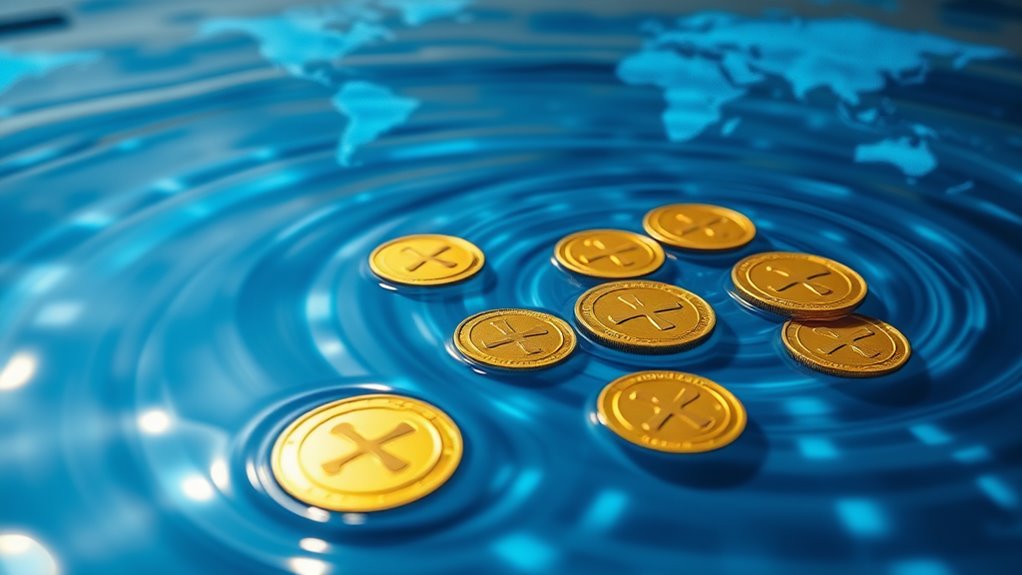
Ripple is shaking up the cryptocurrency game. Forget mining and those pesky high fees; Ripple processes 1,500 transactions per second. It settles payments in just 3-5 seconds—seriously fast. Founded in 2004, it's designed to make cross-border payments easy and cheap, with a focus on liquidity. Plus, it's pre-mined, so there's no supply guessing game. With partnerships galore, Ripple's sticking it to the traditional money transfer systems. Stick around to explore its impact further.
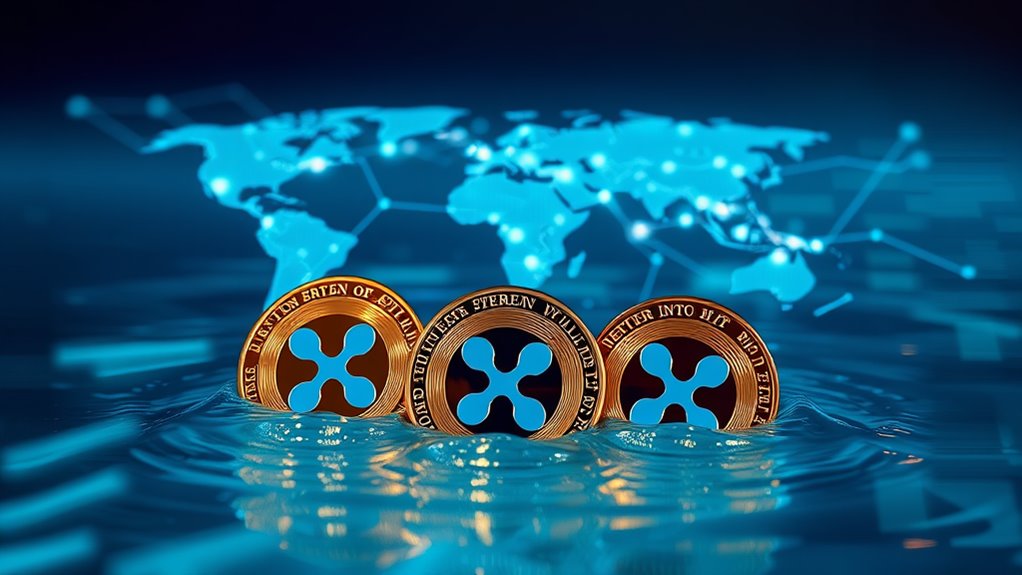
When it comes to cryptocurrency, Ripple stands out like a sore thumb—if that thumb could process 1,500 transactions per second. That's right, folks. While other cryptocurrencies are busy mining like it's the Gold Rush era, Ripple is over here using a consensus protocol. No mining fatigue, no environmental guilt trips. Just a quick 3-5 seconds to settle transactions. Blink, and it's done.
Imagine sending money across borders without waiting days. Ripple makes it happen. It acts as a bridge currency for international payments, linking fiat and cryptocurrencies like a pro. No middlemen, no excessive fees. Just straight-up low-cost transfers. It's like the easy button for sending cash globally. Who wouldn't want that? Unlike gold-backed cryptocurrencies that offer value stability through physical asset reserves, Ripple focuses on transaction speed and efficiency.
Sending money across borders just got a whole lot easier—no wait, no middlemen, just fast, low-cost transfers with Ripple!
The origins of Ripple are a trip down memory lane. Founded in 2004 as RipplePay by Ryan Fugger, it started as an idea about decentralized credit systems. Fast forward to 2012, and voilà—XRP was born, thanks to the brainpower of Jed McCaleb, Chris Larsen, and Arthur Britto. They rebranded from OpenCoin to Ripple Labs and then just Ripple. It was like watching a teenager figure out their style, but with a billion-dollar twist.
They even thought they could replace SWIFT, the big dog of cross-border payments. Bold move, right? With over 100 financial institutions partnering with Ripple, the ambition seems to be paying off. Ripple's technology aims to reduce expensive fees associated with international payments, revolutionizing how we think about global money transfers.
XRP is a different breed. It was pre-mined, with 100 billion XRP available at launch. Ripple Labs holds a hefty 55 billion. No mining means no unpredictable supply. Instead, smart contracts and escrow releases keep it all in check. It's all about liquidity—essential for those cross-border transactions that Ripple loves to facilitate.
In a world of cryptocurrencies that can baffle even the savviest investor, Ripple cuts through the noise. It's a game-changer, a disruptor, and, frankly, a refreshing change in the often chaotic crypto landscape.
Frequently Asked Questions
How Does Ripple Differ From Bitcoin and Ethereum?
Ripple's speed is its party trick—settling transactions in 3-5 seconds. In contrast, Bitcoin takes a leisurely 10 minutes.
And don't even get started on transaction fees; Ripple's are practically free. It's like comparing a sports car to a rusty old truck.
Meanwhile, Bitcoin's stuck in the mining age, while Ripple's got a centralized vibe, unlike Ethereum's decentralized playground.
Can I Buy Ripple With Traditional Currency?
Sure, you can buy Ripple—if you know where to look.
Coinbase, Binance, and Kraken let you swap your good ol' USD for XRP. Just toss in your credit card or bank transfer, and voilà!
But hold up—identity checks are a must. No sneaking in without that.
Fees? They vary, and trust me, they love to sneak up on you. So, be ready for some surprises.
Happy trading, or whatever!
What Wallets Support Ripple (XRP) Storage?
When it comes to XRP wallets, there are plenty of options.
Atomic Wallet? Supports over 1,000 coins.
Exodus? Super user-friendly.
Guarda Wallet? A token buffet.
Don't forget Trust Wallet with its security features.
For cold storage, Trezor and Ledger are the big hitters.
But hey, if convenience is your jam, MoonPay has you covered—just download and go.
Just remember, security matters.
Nobody wants to lose their hard-earned crypto to some shady phishing scam.
Is Ripple Decentralized or Centralized?
Is Ripple decentralized or centralized?
Well, it's a bit of a mixed bag. On one hand, they use Unique Node Lists for validation, which sounds fancy.
But let's not kid ourselves; critics say it's like Proof of Authority, putting power in the hands of a few. The XRP Foundation has a lot of control here.
What Are the Risks of Investing in Ripple?
Investing in Ripple? Buckle up.
First, there's regulatory chaos. The SEC thinks XRP is an unregistered security. That's a big deal.
Then there's volatility—prices swing like a pendulum, from highs to lows, thanks to speculation and news.
Centralization? Yeah, Ripple Labs holds most of the XRP, which raises eyebrows.
And let's not forget storage risks. Keeping XRP on exchanges? You might as well roll the dice.
It's a wild ride, folks!





One Comment