Two-Factor Authentication in Crypto

Two-Factor Authentication (2FA) is non-negotiable in the wild west of cryptocurrency. It's like a bouncer at a club for your digital assets. You need a password and something you own, like your phone. Just using a password? Good luck—it's like trusting a soggy paper bag. Hackers lurk around every corner. Sure, SMS codes sound easy, but they're vulnerable. Want to keep your assets safe? There's more to the story.
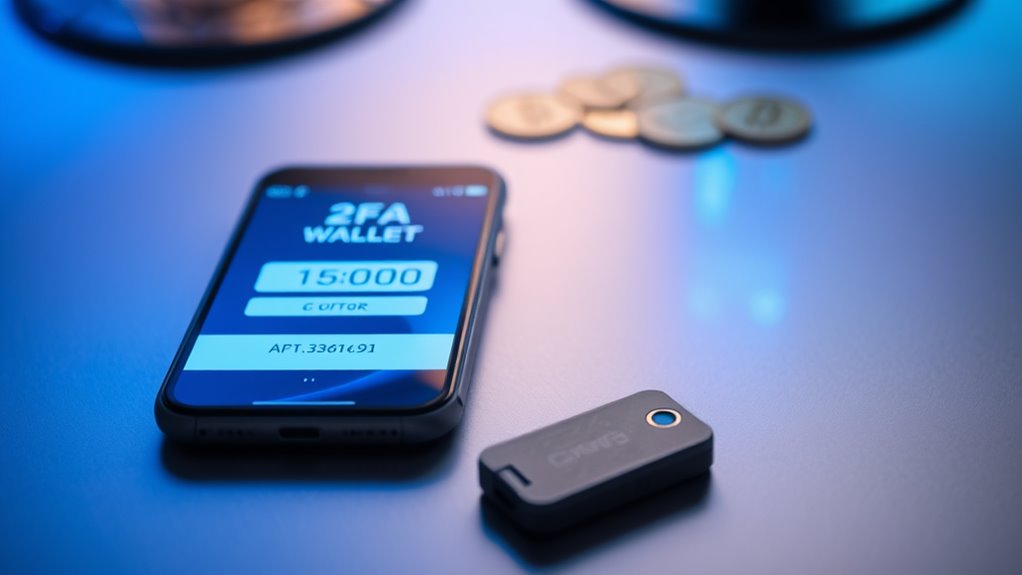
In the chaotic world of cryptocurrency, two-factor authentication (2FA) is like the bouncer at a club, making sure only the right people get in. It's a simple concept: you need two distinct factors to access your accounts—something you know (like a password) and something you have (like your phone). This extra layer of security is vital. Passwords alone? Yeah, they're about as secure as a paper bag in a rainstorm.
Crypto wallets and exchanges are prime targets for hackers. Why? Because they hold high-value assets. One wrong click, and your digital fortune could vanish. Enter 2FA, which aims to mitigate the risk of permanent loss. Most platforms require it for transactions and account access. Good luck trying to access your funds with just a stolen password; it won't happen if 2FA is in place.
There are various methods to implement 2FA. SMS codes? Sure, they're simple, but they're also vulnerable to SIM-swapping attacks. Authenticator apps, like Google Authenticator, generate time-based codes—much better. Then you have hardware tokens, those cute little devices that generate secure codes. Biometric verification? Fingerprints and face scans are cool, but they can be spoofed. And let's not forget email codes, which are just one step above a postcard regarding security. Using 2-factor authentication is one of the strongest defenses against account abuse and crypto theft.
Moreover, the combination of different verification methods in MFA provides an even greater security advantage.
But let's not kid ourselves; 2FA isn't foolproof. Phishing scams are rampant, and hackers can still trick users into giving up both factors. SMS interception? A real threat. Losing your recovery codes? Congratulations, you're locked out. Implementing 2FA helps protect against keylogger threats that can silently record your passwords and compromise your wallet security.
As the crypto world evolves, so does the need for better security. Moving away from SMS is a must. That's just common sense.
With the rise of biometric integration and a broader push for multi-factor authentication, the future looks promising. But until then, users better stay vigilant. Because in crypto, it's either secure your assets or wave goodbye.
Frequently Asked Questions
What Happens if I Lose My Two-Factor Authentication Device?
If someone loses their two-factor authentication device, it's a bit like losing a key to a locked door. Panic sets in.
They can use backup codes—if they remembered to save them. If not, it's a wild goose chase.
Maybe they can disable 2FA if still logged in, or reset the password using a recovery phrase.
If all else fails, contacting support is the last resort. Good luck with that!
Can I Use Multiple Two-Factor Authentication Methods Simultaneously?
Using multiple two-factor authentication methods simultaneously? Not so simple.
Typically, 2FA means one password plus one second factor. That's it. Sure, some platforms might let users choose different second factors, but using them all at once? Nah.
That's more like multi-factor authentication territory. So, while it sounds cool to juggle SMS, authenticator apps, and hardware tokens, standard 2FA keeps it straightforward.
One second factor, folks. Keep it simple, right?
Is Two-Factor Authentication Required for All Cryptocurrency Exchanges?
Not all cryptocurrency exchanges demand two-factor authentication (2FA).
Some treat it like a suggestion, while others make it a must for sensitive actions. Crazy, right? It varies wildly.
Some platforms require it for withdrawals but let you log in without it.
And then there are exchanges that play by the rules of their local regulations.
How Often Should I Update My Two-Factor Authentication Settings?
Updating two-factor authentication settings isn't a one-time deal.
It's like changing your socks—do it often. After swapping devices, changing accounts, or if a breach happens, get on it. Relying on outdated methods? That's just asking for trouble. Seriously.
Backup those recovery codes, and ditch SMS if you can.
Does Two-Factor Authentication Protect Against All Types of Cyber Attacks?
Two-factor authentication isn't a magic shield against every cyber attack.
Sure, it makes life harder for hackers, but it's not foolproof.
Phishing? Yep, still a threat.
Social engineering? Absolutely.
If a hacker can charm someone into giving up their codes, they're golden.
Plus, compromised devices can spill the beans too.
So, while it adds a layer of security, it's not the end-all solution.
Just another tool in a hacker's playground.