

Swing Trading Strategies in Crypto

Swing trading in crypto? It's a wild ride! Traders enter and exit positions quickly, hoping to snag swift profits while dodging market crashes. They rely heavily on technical analysis—think Fibonacci levels and Bollinger Bands—to pinpoint those golden entry and exit moments. But don't forget risk management! Stop-loss orders are a must, or you might as well hand over your money. If you think that's all there is, you might just be missing the bigger picture.
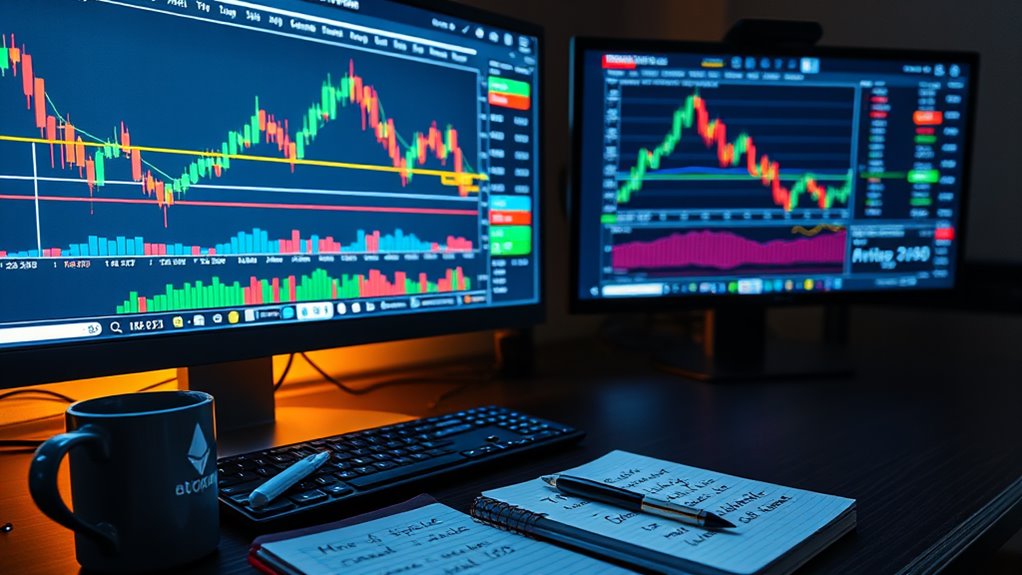
Swing trading in crypto can feel like riding a rollercoaster—thrilling, unpredictable, and sometimes a little nauseating. Traders jump in, hoping to snag quick profits, but the ride is bumpy. Technical analysis strategies are the seatbelts that keep traders safe.
Fibonacci retracement levels? They're like that friend who knows where to find the best pizza in town—vital for identifying entry and exit points. Support and resistance levels play a significant role too, acting like the brakes on this wild ride. They signal where trends might reverse, giving traders something to cling to when markets get shaky.
Then there are Bollinger Bands. These nifty tools help spot overbought or oversold conditions. Think of them as the safety bars on the coaster, helping traders avoid disastrous drops.
Trend-catching strategies rely on moving averages to follow the market's direction. When short-term moving averages cross long-term ones? That's a signal! It's like a neon sign flashing "Buy!" or "Sell!" Swing trading excels in capturing these price movements, allowing traders to maximize profits. Additionally, understanding market fundamentals can lead to better-informed trading decisions.
But let's not get ahead of ourselves; market sentiment and fundamentals also matter. A project's strength, tokenomics, and even the team behind it are significant. News, too—macro events can shift trends overnight. Traders must stay alert, or they might miss the ride altogether.
Risk management is the name of the game. Stop-loss orders? They're like a safety net, catching traders before they fall too far. Position sizing helps avoid overexposure. It's not just about being brave; it's about being smart. Using profit calculators before each trade can help investors realistically assess potential gains against risks.
And let's be real—no one wants to gamble with over-leverage in such a volatile market.
Entry and exit strategies are like the thrill of the plunge. Breakout trading, buying pullbacks, and trend-following are tactics to make the ride even more interesting. Volume analysis validates breakouts, ensuring there's enough momentum to keep the fun going.
In this chaotic world of crypto trading, it's all about keeping your wits about you while enjoying the ride.
Frequently Asked Questions
What Is the Best Cryptocurrency for Swing Trading?
When it comes to choosing the best cryptocurrency for swing trading, it's a jungle out there.
Bitcoin? Solid choice. High liquidity, lots of price swings—perfect for those quick profits.
Ethereum? Also a contender, especially with all that DeFi buzz.
But let's not gloss over the wild altcoins. They're risky, but boy, can they move!
Just remember, volatility is a double-edged sword. Trade wisely, or risk getting sliced.
How Much Capital Is Needed to Start Swing Trading Crypto?
Starting capital for swing trading in crypto? Well, it's flexible—no one-size-fits-all answer here. You could plunge in with a few bucks, or throw in a chunk if you're feeling bold.
Just remember, leverage can be a double-edged sword. Beginners often tiptoe in with small amounts to dodge disaster.
And hey, demo accounts exist for a reason. Better to practice first than cry later, right?
Risk management is key, folks!
What Are Common Mistakes in Crypto Swing Trading?
Common mistakes in trading? Oh, where to start!
Overmonitoring leads to panic. FOMO strikes, and suddenly, impulsive trades are everywhere.
Risk management? What's that? Forget stop-losses; let's just wing it!
Strategy execution? Who needs a plan when news is flying around?
And research? Skim the surface and follow the crowd; sounds smart, right?
The truth is, ignoring these basics can turn trading dreams into nightmares.
But hey, live and learn!
How Do Taxes Affect Crypto Swing Trading Profits?
Taxes can seriously munch on profits. Short-term gains from crypto are taxed like regular income—ouch! That means higher rates, up to 37%.
Hold onto your coins longer? You get a break with lower long-term rates.
But wait, losses can offset gains—up to $3,000 a year. Just don't be tempted to play the wash sale game; it's a trap!
Can Swing Trading Be Automated in Crypto?
Sure, swing trading can totally be automated in crypto.
Bots can handle trades based on set rules, like moving averages or RSI. Forget the stress of emotional decisions; these bots don't freak out during market dips. They watch the charts 24/7, never needing a coffee break.
Just be aware—over-optimization can mess things up. And let's not forget those pesky black swan events. They don't care about your bot's strategy.