
Understanding Gold Valuation

Understanding gold valuation isn't rocket science, but there are key factors. First, there's purity—24 karats means pure gold, folks. Then, weight matters; more grams, more cash. Oh, and the condition? Scratches can tank value, while vintage charm might boost it. Let's not forget uniqueness—cookie-cutter gold pieces don't fetch much. Finally, gold prices swing daily based on market whims. So, loop back to those variables and watch your gold game's worth shift. What else is there to know?
Gold isn't just a shiny metal; it's the ultimate status symbol. People love it. They flaunt it. But what's behind that golden glow? Understanding gold valuation is essential if one wants to know why a gold ring can cost as much as a car.
First off, there's purity. The pureness of gold is measured in karats. Pure gold is 24 karats. If you see anything lower, well, it's just not the real deal. The higher the karat, the more valuable the gold. Simple, right? In fact, 24 karat gold is considered 100% pure, making it the highest quality available.
Purity is key! Gold is measured in karats, with pure gold hitting 24 karats. Higher karats mean higher value!
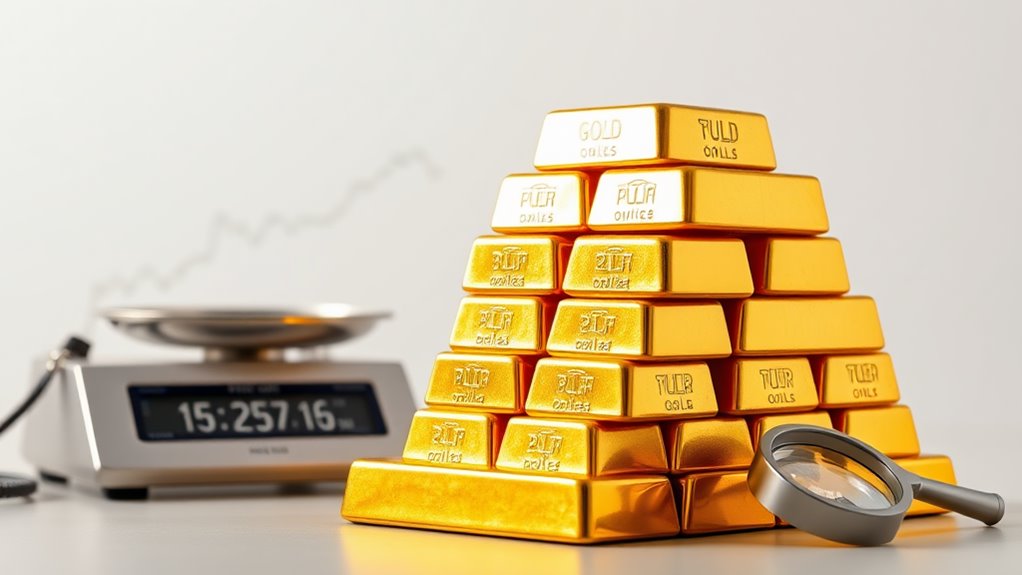
Then there's weight. Gold is typically weighed in grams or troy ounces. One troy ounce is about 31.1 grams. So, if a gold bar weighs a few ounces, you can bet it's worth a pretty penny. Weight is a key factor that directly influences the overall market value of gold items.
But hold your horses! Weight alone doesn't cut it. Condition matters too. A scratched-up piece of gold jewelry isn't going to fetch top dollar – unless it's vintage, and then people will pay for the story.
Design? Oh, don't get me started. A unique design can skyrocket value, while mass-produced pieces are just…well, mass-produced.
Market price is where it gets really wild. Gold prices fluctuate daily, driven by global demand and economic trends. One day it's up, the next it's down. It's like a rollercoaster, but without the fun.
Investors watch it closely, and if the economy sneezes, gold prices can soar. People often turn to gold as a safe haven during tough times. Makes sense. When everything else is crashing, gold tends to hold its ground. With prices having surged over 40% since early 2024, central bank demand has been a major driver pushing the precious metal to new heights.
Frequently Asked Questions
How Does Geopolitical Stability Affect Gold Prices?
Geopolitical stability? It's like a cozy blanket for gold prices—when it's warm and fuzzy, prices chill out.
But toss in some conflict? Boom! Investors scramble for gold like it's the last slice of pizza at a party.
Historical data shows price spikes during crises, like a rollercoaster ride fueled by fear. Tensions create uncertainty, and guess what? Gold loves that chaos.
Is Gold a Good Investment During Inflation?
Is gold a good investment during inflation? Well, it's a mixed bag.
Gold's been a go-to during economic chaos—think skyrocketing prices when inflation kicks in. Sure, it can hold its value like a champ, but don't expect it to pay you back like stocks do.
And hey, it's not a magic bullet. Prices can be wild, and timing is everything. So, tread carefully.
Gold might glitter, but it won't fill your pockets overnight.
What Are the Main Factors Influencing Gold Demand?
Gold demand? Oh, it's influenced by a bunch of things.
First, you've got the jewelry crowd, which loves shiny stuff—especially in Asia.
Then there's the central banks, hoarding gold like it's going out of style to dodge dollar drama.
And let's not forget investors. When chaos reigns, they flock to gold like moths to a flame.
How Does Currency Strength Impact Gold Valuation?
Currency strength? Oh, it's a big deal for gold.
When the dollar is strong, gold is like a fancy dessert no one wants. Too pricey for foreign buyers. Higher interest rates? Even worse! Gold looks like a bad investment.
But when the dollar wobbles, gold shines. Investors flock to it during crises. The world loves a shiny rock when things get rough.
It's all about the dollar dance, folks!
Can Gold Be a Hedge Against Economic Downturns?
Gold is like that reliable friend who shows up when times get tough. During economic downturns, it often soars while stocks tumble.
History shows gold gains in every recession phase. Sure, it's a bit volatile at first, but once fear settles in, it shines.
With central banks pumping money and interest rates low, gold becomes more appealing. It's not just pretty; it's a hedge against chaos.
Who wouldn't want that?