

Freedom of Information Lawsuit Forces Government’s Hand on Bitcoin Creator’s Secret Identity

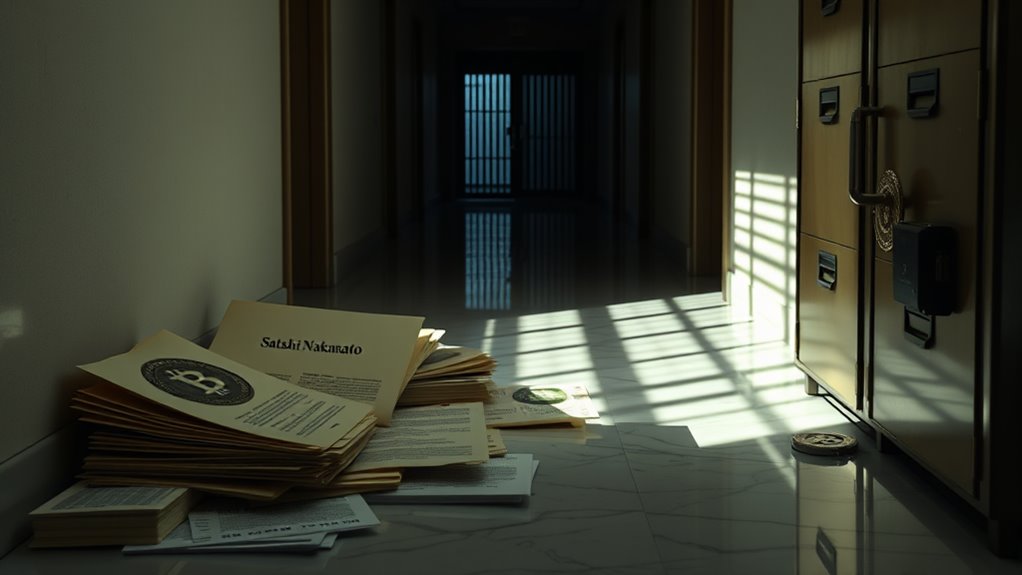
While the world continues to obsess over cryptocurrency’s ups and downs, a far juicier drama unfolds in federal courts. James Murphy has filed a Freedom of Information Act lawsuit against the Department of Homeland Security. His mission? Unmask Satoshi Nakamoto, Bitcoin’s mysterious creator who vanished from the internet in 2011.
Murphy isn’t alone in this quest. Former Assistant U.S. Attorney Brian Field is helping with the litigation. The lawsuit hinges on a 2019 presentation by DHS Special Agent Rana Saoud, which supposedly contains revelations about Satoshi’s identity. Pretty convenient timing, considering Bitcoin’s recent market turbulence.
The hunt for Bitcoin’s ghost has strange bedfellows—an ex-prosecutor and convenient government revelations amid market chaos.
The government’s response has been predictably cagey. The FBI keeps issuing those frustrating “neither confirm nor deny” Glomar responses to FOIA requests. Dave Troy tried in 2024 and got the same bureaucratic shoulder shrug. Classic feds. The FBI’s response implied that Satoshi is a third party individual, continuing the pattern of vague acknowledgments without substantial disclosure.
Here’s where it gets interesting. According to documents cited in Murphy’s lawsuit, Satoshi wasn’t a lone genius but potentially a group of four people interviewed in California. That’s quite a bombshell if true. The cryptocurrency community has spent years debating whether their hero was one person or many.
Remember Craig Wright? The Australian computer scientist who’s been claiming to be Satoshi for years? He’s facing his own legal battles after being ordered to pay $100 million in a lawsuit. Wright’s credibility took another hit when he had to issue a public disclaimer admitting he couldn’t prove he was Satoshi. Awkward.
Nakamoto’s last known communication came in April 2011. The P2P Foundation profile listed a Japanese man born in 1975, but many skeptics believe this was deliberate misdirection.
Murphy’s lawsuit might finally force some answers from reluctant government agencies. The outcome carries significant weight since Bitcoin’s market cap exceeds $1 trillion, fueling unprecedented interest in discovering its creator’s true identity. Or it might just add another chapter to cryptocurrency’s greatest mystery. Either way, while Bitcoin investors stress about price fluctuations, the real drama is happening in court documents, not trading charts.
The truth about the person (or people) who created a trillion-dollar asset class remains tantalizingly out of reach.