
Advanced Trading Strategies for Experienced Investors

As an experienced investor, you understand the value of mastering advanced trading strategies to navigate the complex and dynamic market landscape. By honing your technical analysis skills and developing an extensive trading plan, you’ll be equipped to leverage diverse approaches – from trend following to mean reversion – to maximize your profit potential. However, the true key to success lies in optimizing your risk management techniques and interpreting economic data to inform your decision-making. Dive deeper to discover how these powerful tools can elevate your investment performance.
Key Takeaways
- Leverage diverse trading strategies, including trend following, breakout, range, and mean reversion, to adapt to varying market conditions.
- Optimize risk management techniques by establishing risk thresholds, diversifying strategies, and incorporating dynamic hedging methods.
- Interpret economic data and market sentiment to plan trading strategies effectively, monitoring economic calendars and news sources.
- Develop a comprehensive trading plan with clear objectives, risk management strategies, and trade execution rules to promote discipline and long-term success.
- Masterfully apply technical analysis tools, such as moving averages, MACD, and RSI, to forecast future market behavior and refine trading approaches.
Technical Analysis Mastery
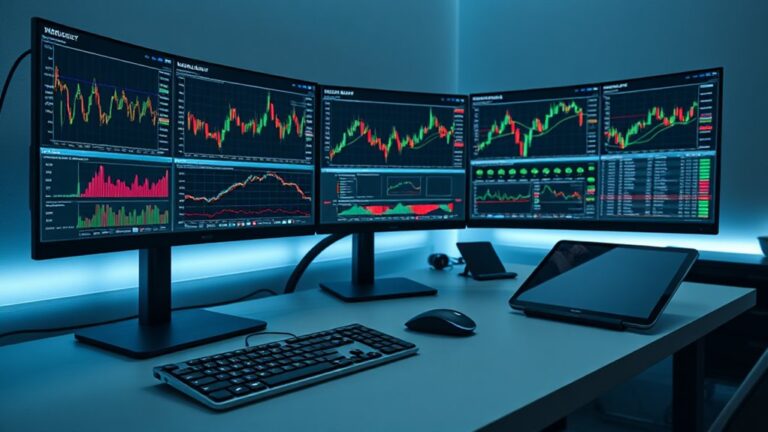
One of the most essential skills for experienced investors to master is technical analysis. This approach involves analyzing historical price data and trading volume to forecast future market behavior. Tools like moving averages, MACD, and RSI are instrumental in technical analysis, allowing traders to decipher market conditions. Understanding chart patterns and candlestick patterns is also essential for experienced traders. The strategic application of these technical indicators is fundamental in refining one’s trading approach. Technical analysis is a indispensable step for experienced investors to take, as it enables them to make more informed and data-driven decisions in the markets.

Developing a Comprehensive Trading Plan
As an experienced investor, you understand the importance of a vital trading plan. This roadmap outlines clear objectives, risk management strategies, and defined rules for entering and exiting trades. Crafting your plan should consider preferred timeframes, risk tolerance level, and specific criteria for trade execution. Regular review and adjustment of the plan is essential to adapt to changing market conditions and evolving trading style. A well-defined trading plan promotes discipline, consistency, and risk control – pivotal elements for long-term trading success. By adhering to your plan, you’ll navigate the markets with confidence, making informed decisions that align with your overall investment goals.
Leveraging Diverse Trading Strategies
Why is diversifying your trading strategies indispensable for experienced forex traders? As an experienced trader, leveraging diverse trading strategies is critical for maneuvering the volatile forex market. Popular approaches include trend following, breakout trading, range trading, and mean reversion. Mastering multiple strategies allows you to build a robust trading approach adaptable to various market conditions. For example, a 3-pronged strategy could involve: 1) Trend trading during strong market movements, 2) Range trading during sideways markets, and 3) Mean reversion trading when markets reverse. Understanding the nuances of different strategies and their associated risks is paramount to maximize potential profits while managing your overall trading risk.
Optimizing Risk Management Techniques
Given the critical importance of effectively managing risk, experienced forex traders mustn’t overlook the necessity of optimizing their risk management techniques. Establishing well-defined risk thresholds and position sizing parameters is pivotal to limit potential losses. Additionally, diversifying trading strategies and incorporating multiple layers of risk management, such as stop-loss orders and trailing stops, can enhance portfolio protection. Regularly reviewing and adjusting risk management protocols based on changing market dynamics is indispensable, as is incorporating dynamic hedging techniques like options and futures contracts to offset downside risks. Backtesting risk management strategies using historical data can provide valuable insights to improve risk-adjusted returns and minimize the costs associated with a trader’s risk tolerance.
Interpreting Economic Data and Market Sentiment
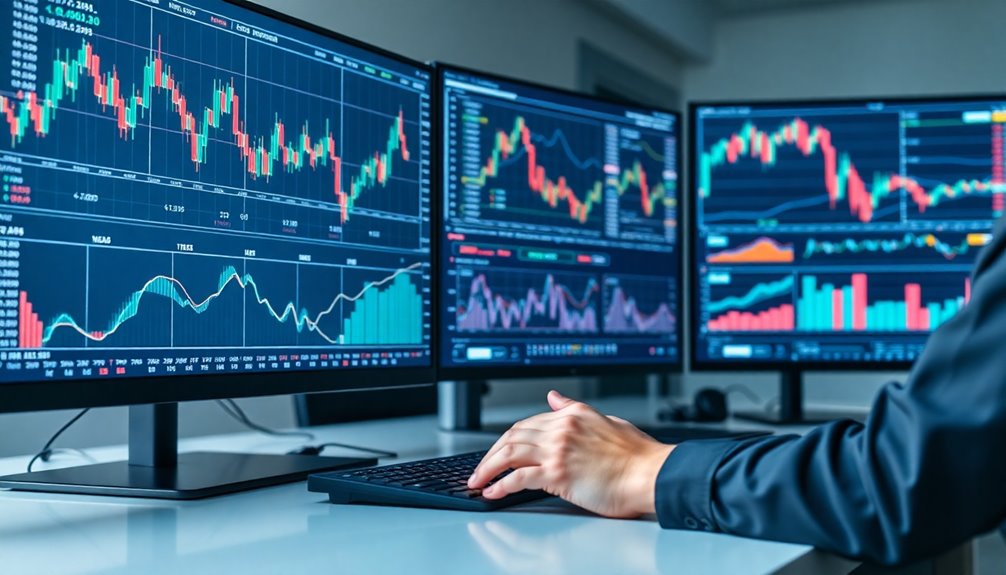
Understanding key economic indicators like GDP, employment, and inflation data is vital for experienced investors to gauge their impact on currency values. Monitoring economic calendars and news sources can help you stay informed on upcoming events that may influence market sentiment. Analyzing how the market is likely to react to different economic scenarios is essential for making informed trading decisions.
Economic Indicator Impact
One of the most closely watched economic indicators that can markedly impact currency valuations is the Gross Domestic Product (GDP) report. This data provides insights into a country’s overall economic growth, which can extensively influence a currency’s strength or weakness. Similarly, Non-Farm Payroll (NFP) data and the Consumer Price Index (CPI) are new certain financial indicators that traders closely monitor, as they help gauge the Federal Reserve’s monetary policy decisions and their impact on the U.S. dollar. Additionally, high volatility often accompanies central bank interest rate announcements and forward guidance, triggering substantial fluctuations in foreign exchange markets.
Monitoring Market Sentiment
Analyzing key economic indicators like Gross Domestic Product (GDP), employment data, and inflation rates can provide you with priceless insights into prevailing market sentiment and distinctly impact currency valuations. Monitoring central bank monetary policy decisions and interest rate changes is essential for understanding market dynamics and positioning trades accordingly. Interpreting market sentiment, including investor confidence and risk appetite, can assist you in making more informed trading decisions in the forex market. Maintaining strong client relationships and staying up-to-date with financial news and economic calendars helps experienced investors identify market-moving events and plan their trading strategies effectively.
Interpreting News Scenarios
Interpreting the potential impact of economic news and market sentiment is essential for experienced forex traders to navigate the volatility of currency markets. By analyzing potential scenarios and the anticipated effects of economic data releases on specific currency pairs, traders can better manage risk and make informed decisions. Key considerations include:
- Evaluating the potential impact of economic indicators, such as GDP, employment, and inflation, on the respective currencies.
- Evaluating broader market sentiment through news, events, and investor psychology to anticipate market reactions.
- Utilizing economic calendars and financial news sources to stay up-to-date on upcoming events that may affect currency pair movements.

Mastering the Psychology of Trading
As an experienced trader, your ability to manage your emotions and maintain discipline is paramount. Developing self-awareness and techniques like journaling can help you navigate market volatility with a calm, rational mindset. Overcoming common cognitive biases and implementing effective stress management strategies are essential for sustaining your trading performance over the long term.
Emotional Intelligence in Trading
Emotional intelligence is decidedly a crucial component of successful trading for experienced investors. Understanding and managing cognitive biases, such as overconfidence, anchoring, and loss aversion, can substantially improve trading performance. Cultivating disciplines like journaling, meditation, and visualization can help traders gain greater control over their mental and emotional states. Effective stress management techniques, including proper work-life balance and mindfulness practices, enable traders to remain calm and focused under pressure. Seeking professional support through trading psychology coaching or counseling can provide experienced traders with tools to enhance their emotional regulation and decision-making abilities.
Discipline and Impulse Control
Mastering the psychology of trading requires unwavering discipline and the ability to control impulsive behaviors. Advanced trading strategies for experienced investors demand a clear trading plan and strict adherence to it, which can mitigate the impact of psychological biases. Regular self-reflection and performance review can uncover behavioral patterns undermining success, while visualization techniques and mental rehearsal can improve composure during high-stress market conditions. Implementing consistent risk management strategies and building a trading routine are essential to curbing impulsive decision-making. Ultimately, experienced traders who prioritize emotional intelligence and self-awareness in their approach are more likely to maintain the discipline necessary for long-term trading success.
Developing a Resilient Mindset
Why is developing a resilient mindset pivotal for experienced investors seeking to master the psychology of trading? Amidst the volatility and complexities of the market, cultivating emotional discipline, self-awareness, and a growth-oriented perspective is critical. Consider these key strategies:
- Embrace setbacks as opportunities for learning and improvement, fostering a mindset of continuous growth.
- Leverage stress management techniques like meditation and exercise to stay focused and make rational decisions.
- Identify and overcome cognitive biases to guarantee unbiased market analysis, essential for executing complex strategies.

Navigating the Forex Market With Advanced Strategies
The forex market is a vast and dynamic arena, offering experienced traders a wealth of new opportunities to capitalize on its fluctuations. Seasoned market participants can leverage diverse strategies, from trend following to breakout trading, to navigate this complex landscape. Effective risk management, including stop-loss orders and proper position sizing, is vital for safeguarding capital and ensuring longevity. Understanding key economic indicators and market sentiment is essential for making informed trading decisions. A well-defined trading plan, mastery of technical analysis tools, and chart pattern recognition further refine an experienced trader’s approach to forecasting future market behavior.
| Strategy | Description | Potential Rewards |
|---|---|---|
| Trend Following | Identify and capitalize on established market trends | Consistent profits during trending markets |
| Breakout Trading | Profit from price movements beyond established support/resistance levels | Opportunities for outsized gains during breakouts |
| Range Trading | Exploit price fluctuations within defined trading ranges | Consistent, lower-risk returns in range-bound markets |
| Mean Reversion | Identify and trade price reversals to historical averages | Potential to capitalize on market overreactions |
Enhancing Portfolio Performance Through Strategic Diversification
One of the most effective ways to enhance the performance of your investment portfolio is through strategic diversification across uncorrelated asset classes. By incorporating alternative investments like real estate, commodities, and hedge funds, you can access new sources of diversification benefits and potentially higher returns. Optimizing your asset allocation based on historical correlations and risk/return profiles can further improve the risk-adjusted returns of your portfolio. In addition, regularly rebalancing your portfolio to maintain target asset class weightings is vital for capturing the long-term benefits of diversification. Leveraging portfolio optimization techniques like mean-variance analysis can help you identify the most efficient frontier of risk and return for your unique investment goals.
Frequently Asked Questions
What Is the 3 5 7 Rule in Trading?
The 3 5 7 rule in trading refers to a technical analysis strategy that monitors the relationship between 3-day, 5-day, and 7-day moving averages. When the 3-day moving average crosses above the 5-day and 7-day moving averages, it’s considered a bullish signal indicating a potential uptrend. Conversely, when the 3-day moving average crosses below the 5-day and 7-day, it’s interpreted as a bearish signal suggesting a potential downtrend. Traders often use this rule as a filter to identify market trends before making trading decisions.
What Is the Most Powerful Trading Strategy?
There’s no one-size-fits-all “holy grail” when it comes to trading strategies. Successful traders often use a blend of approaches, like trend following, range trading, and mean reversion, to adapt to market shifts. Advanced techniques like technical indicators, options, and sophisticated instruments can enhance returns, but proper risk management is key. Understanding economic news and market sentiment is also vital for experienced forex traders implementing complex strategies.
What Is the 90% Rule in Trading?
The 90% Rule in trading refers to the statistic that 90% of traders lose 90% of their capital within the first 90 days of trading. This highlights the high failure rate among novice traders who often lack proper risk management, trading discipline, and market knowledge. Successful traders attribute their long-term profitability to gradually building trading expertise over time, rather than seeking quick gains.
What Is the 11AM Rule in Trading?
The 11 AM rule in trading refers to the tendency for markets to stabilize and become less volatile after the opening hours. This is based on the observation that significant trading activity and price swings often occur in the first few hours of the trading session, before the market settles into a more stable pattern. Experienced traders may use this rule to time their entry and exit points, aiming to avoid the increased volatility of the early trading hours.