



Market Manipulation in Cryptocurrency

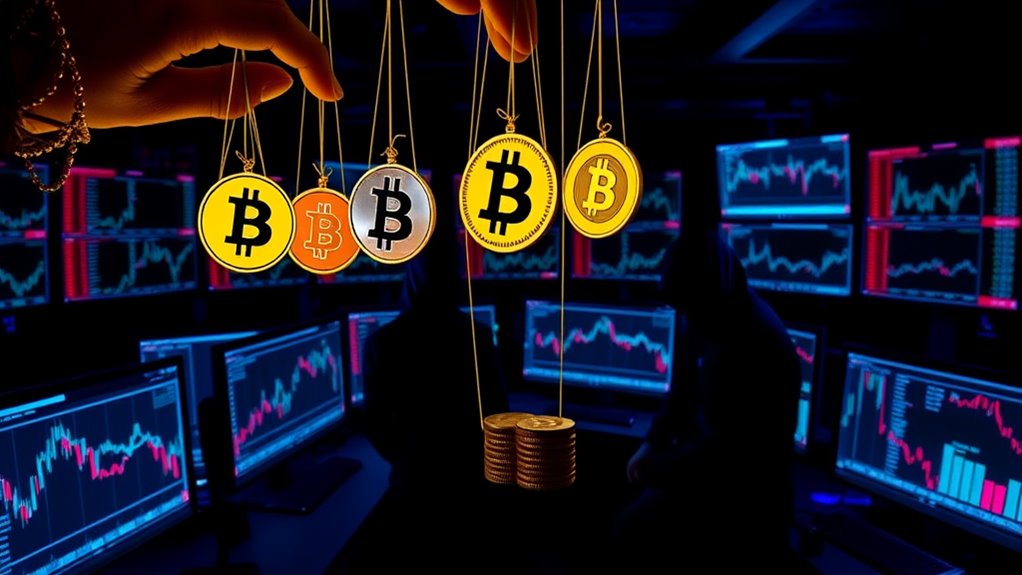
Market manipulation is a huge problem in crypto. Traders often collude to pump prices of low-cap coins, leaving unsuspecting newcomers in the dust. Spoofing and wash trading are common tricks—creating fake demand or just swapping tokens back and forth like they're playing a game. Whales exploit this chaos, swinging prices like a pendulum. It's messy, confusing, and often leaves retail investors feeling burned. Want to know the nitty-gritty of how these tactics work? Keep looking.
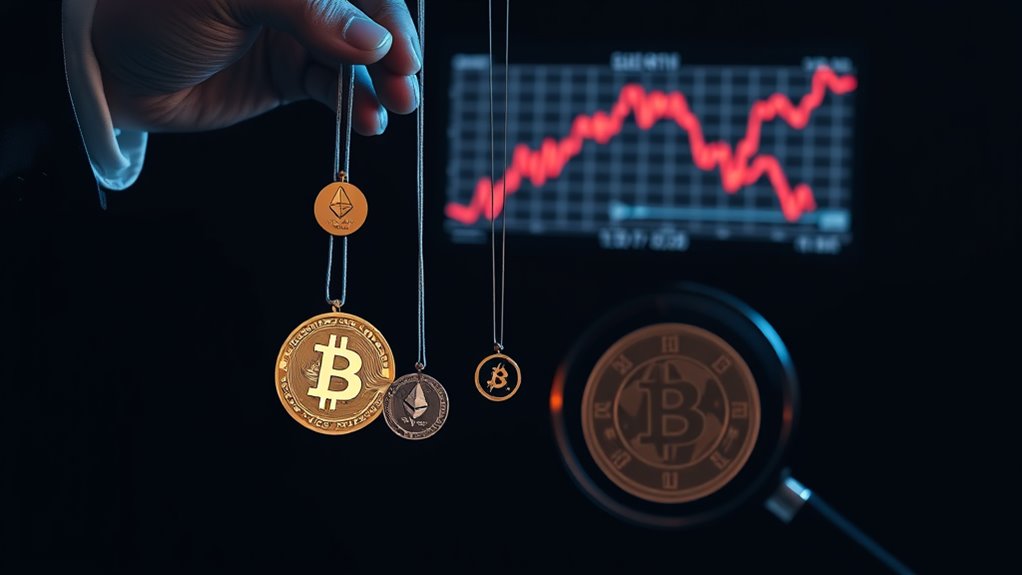
In the wild west of cryptocurrency, market manipulation isn't just a rumor; it's practically a spectator sport. Imagine this: groups of savvy traders coordinating price inflation schemes like a well-rehearsed dance. They zero in on low-cap coins, the little guys of the market, available on limited exchanges. With the power of social media, they hype these assets on platforms like Telegram and Reddit, creating a frenzy.
In the cryptocurrency wild west, savvy traders orchestrate price inflation like a choreographed dance, preying on low-cap coins.
Meanwhile, latecomers, keen to cash in, get stuck holding the bag when the manipulators sell at the peak. The FBI even had to step in with Operation Token Mirrors, which uncovered a $25 million scheme involving fake trading volume. Ouch.
Then there's spoofing. It's the digital equivalent of placing a giant "Sale" sign in a store and then yanking it away. Big buy or sell orders pop up, only to vanish like a mirage, creating a false sense of demand. This little trick can trigger panic selling or buying, distorting the market. Regulatory focus on wash trading aims to enhance market transparency and trust, making it a crucial aspect of the fight against manipulation. The challenge of detecting market manipulation tactics is compounded by the anonymity that characterizes cryptocurrency trading. The decentralized nature of cryptocurrencies further complicates enforcement efforts, as transactions can occur outside traditional financial monitoring systems.
And let's not forget wash trading, where the same asset is bought and sold repeatedly to inflate trading volume. In 2019, a staggering 95% of Bitcoin volume on unregulated exchanges was found to be wash-traded. Shocking, right? Smaller exchanges often resort to this to attract users. Spoiler alert: it erodes investor trust.
Whale manipulation adds another layer of chaos. These big players can dramatically swing prices with a single order, often using spoofing to amplify their effects. They exploit market makers, leading to wild price volatility that leaves retail investors scratching their heads.
It's a high-stakes game, where the odds are stacked against the average Joe. With regulatory scrutiny increasing, including DOJ investigations into spoofing cases, the stakes are high. But in this unpredictable arena, one thing's for sure: the thrill of the hunt for honest trading is often overshadowed by the shadowy tactics of the manipulators.
Frequently Asked Questions
How Can I Protect My Investments From Market Manipulation?
To shield investments from market manipulation, one needs to be sharp.
Choose platforms with solid anti-manipulation policies—think big names like Binance or Coinbase. Small, unregulated exchanges? Pass.
Diversify. Low-cap altcoins can be traps. Keep an eye on market sentiment; FOMO is a killer.
Know the tricks—pump-and-dump, wash trading. And for goodness' sake, verify news before jumping in.
It's a jungle out there, so stay smart and alert.
What Are Common Signs of Market Manipulation in Cryptocurrencies?
Common signs of market manipulation?
Look out for sudden price spikes—like a rollercoaster that goes up, then crashes.
Notice those mysterious 'buy walls' that seem to appear out of nowhere? Classic.
Social media hype is another red flag; if something seems too good to be true, it probably is.
And don't forget about repetitive trading patterns.
If it feels fishy, it probably is.
Stay sharp, folks.
Are There Legal Consequences for Market Manipulation in Crypto?
Absolutely, there are serious legal consequences for market manipulation.
Think prison time, hefty fines, and all sorts of legal nightmares. The DOJ has been busy charging folks with wire fraud and conspiracy.
The SEC and CFTC aren't just twiddling their thumbs either; they slap on civil complaints and demand restitution.
How Do Exchanges Monitor for Market Manipulation?
Exchanges have some serious tech to keep an eye on trading antics. They use AI and big data to sniff out shady moves, like spoofing and wash trading.
Real-time monitoring? Check. Alerts for suspicious activity? Double check. They even track multiple exchanges to catch collusion in the act.
It's like a digital watchdog, barking at any sign of trouble. So, if you think you can pull a fast one, think again.
Can Market Manipulation Affect Long-Term Cryptocurrency Value?
Market manipulation can definitely mess with long-term value.
Think about it: when shady practices inflate prices, it's like building a house of cards. One gust of reality, and boom! Trust crashes.
Investors bail, and good luck attracting new blood. Sure, some might see through the tricks, but many won't.
In the end, a market with shaky foundations? Yeah, that's a recipe for disaster.
And nobody wants to invest in a sinking ship.




One Comment