




Crypto Security Audit: Securing Blockchain Networks

Crypto security audits? They're not just a nice-to-have; they're a must. With billions lost to hacks, ignoring this is like leaving your front door wide open. Audits sniff out vulnerabilities and check for compliance, acting as a digital bouncer for your blockchain. From pesky API issues to risky coding flaws, these checks catch it all. They keep the trust levels high and the financial disasters low. But wait, there's more to this story.
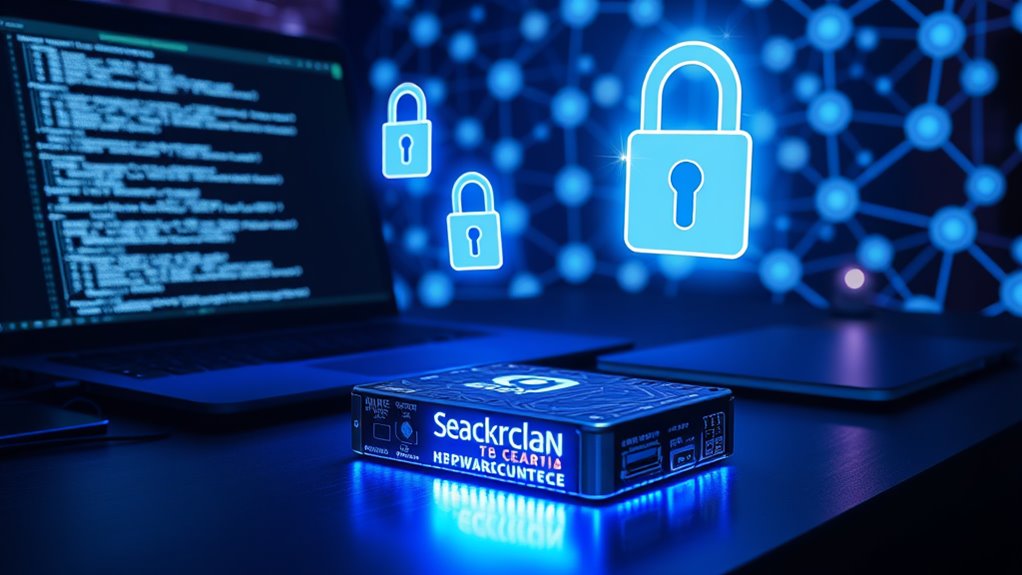
In a world where digital currency reigns supreme, it's hard to ignore the lurking dangers beneath the surface. Blockchain networks are not just fancy tech jargon; they're battlefields where hackers lurk, waiting to pounce. Enter the crypto security audit, the unsung hero in this chaotic landscape. Its mission? To sniff out vulnerabilities and compliance risks while ensuring everything plays by the rules, like GDPR and HIPAA. Who knew keeping things legal could be so complicated?
In the digital currency arena, crypto security audits stand as vigilant guardians against lurking hackers and compliance chaos.
This audit process isn't just for show. It's about detecting entry points for attacks and operational dysfunctions. Think of it like a digital bouncer checking IDs before letting anyone into the club. In 2022 alone, a staggering $2.81 billion vanished due to smart contract hacks. Yes, billion with a B. That's a lot of dough, and crypto security audits aim to prevent such financial embarrassments.
The nuts and bolts of these audits include cryptographic security checks, smart contract evaluations, and even threat modeling. It's like a digital health check-up, only with more numbers and fewer doctors. Auditors scour through network diagrams, logs, and code repositories, hunting for flaws like reentrancy or integer overflow. They test with static analyzers and fuzzing tools, simulating attacks to gauge system resilience. It's not glamorous work, but it's essential. Regular audits are crucial to adapting to new threats and maintaining a secure environment. Blockchain security audits are critical for maintaining the integrity of blockchain applications. Recent high-profile incidents like the Bybit exchange hack demonstrate why hardware wallets are increasingly essential for serious crypto investors.
The audit landscape is rife with common vulnerabilities. Unsecured APIs, outdated dependencies, and poor consensus protocols are just a few gremlins in the system. These weaknesses can lead to catastrophic data exposure or liquidity risks.
Frequently Asked Questions
What Is the Cost of a Crypto Security Audit?
The cost of a crypto security audit can vary wildly.
Basic smart contracts? You're looking at $1,000 to $20,000.
For more complex projects, like dApps or NFT marketplaces, expect to shell out $20,000 to $50,000.
Advanced protocols? Brace yourself for $75,000 or more.
Factors like code complexity, audit type, and auditor expertise can really jack up those prices.
In short, it's a pricey endeavor, but hey, better safe than sorry, right?
How Often Should Blockchain Networks Be Audited?
Blockchain networks need regular audits.
At least once a year. Seriously.
Complex systems? More audits.
DeFi platforms are wild, so check those often.
Got a hack? Time for an event-triggered audit.
Major updates? Yup, audit time again.
Best practices? Automated tools and stress testing are your friends.
It's like a safety net, just a really, really necessary one.
Don't skip this—security isn't optional.
Who Conducts Crypto Security Audits?
Crypto security audits are performed by specialized firms. Think Hacken, Certik, and Trail of Bits.
These guys delve into the code, hunting for vulnerabilities like a game of digital whack-a-mole. They use fancy tools, AI, and good old-fashioned manual checks.
And let's not forget about bug bounty programs—crowdsourcing vulnerabilities because why pay one expert when you can have many?
It's a wild world out there, and these firms are the gatekeepers.
What Tools Are Used in Crypto Security Audits?
In the wild world of crypto security audits, tools reign supreme.
Automated options like Astra Security and Tenable Nessus shine for vulnerability detection.
Then there are the smart contract heroes—Slither and Mythril, ready to catch those sneaky bugs.
Compliance? Netwrix has that covered.
Finally, for network monitoring, Nagios keeps an eye on things.
It's a chaotic landscape, but these tools are the unsung champions, battling threats in the digital domain.
Are Audits Mandatory for All Blockchain Projects?
Audits aren't a one-size-fits-all thing for blockchain projects.
Some places say, "You must audit!" while others shrug and say, "Meh."
If a project deals with sensitive stuff, watch out—those audits might be non-negotiable.
Still, many projects skip this step. Spoiler alert: that's risky.
Hacked projects often end up like unfortunate headlines.







One Comment